Column · @garrettdcht083
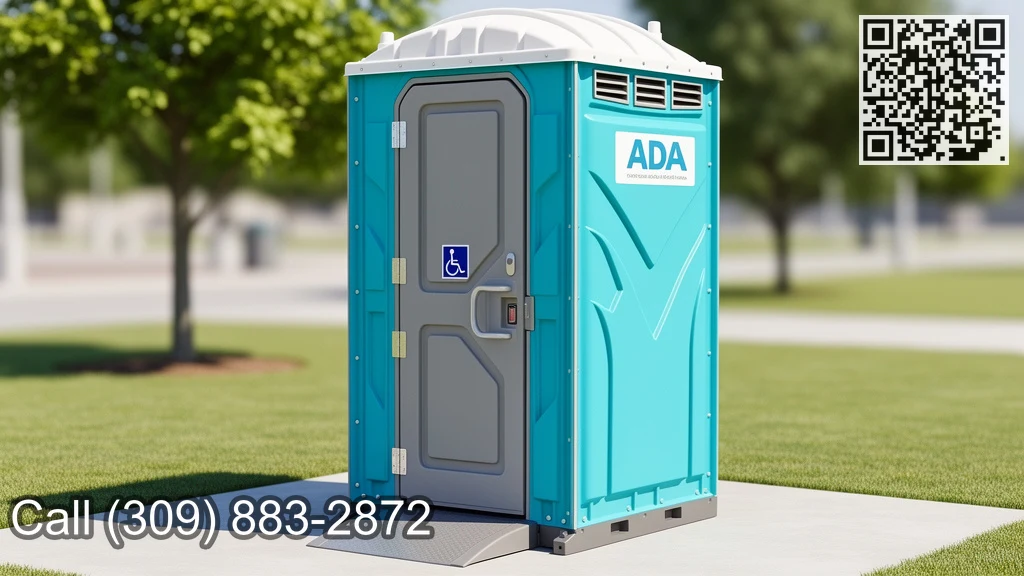
ADA Handicap Available Portable Toilet Rental for Inclusive Event Gain Access To
When individuals prepare an event, bathroom accessibility often obtains treated like a logistics line item. It should not. For several guests, the distinction in between sensation welcome and sensation omitted comes down to whether they can conveniently, safely, and individually make use of the bathroom on site.
That is why an ada handicap accessible mobile restroom is not a nice added. It becomes part of fundamental access.
I have seen this issue come close to in 2 very various ways. In one case, organizers treated availability as an afterthought and added a solitary system late at the same time, then put it on uneven ground beside an area. Technically, they had actually rented out an ada mobile restroom, but functionally they had not produced genuine access. In another situation, an event team begun by asking where guests with movement handicaps would park, exactly how they would certainly travel to the entry, where they would certainly sit, and how they would certainly get to the restrooms without obstacles. The toilet service became part of that larger access strategy, and the entire event really felt https://edwinkntq024.lucialpiazzale.com/ada-available-portable-restroom-specifications-for-rental-decision-makers various. It felt considerate.
That distinction matters. Renting out ada compliant mobile restrooms has to do with greater than inspecting a box. It is about ensuring an individual making use of a mobility device, pedestrian, mobility scooter, or various other wheelchair help is not required to improvisate their method via a standard human need.
What the ADA requires for mobile toilet access
For mobile toilet leasings in the United States, the managing federal criterion is the 2010 ADA Criteria for Accessible Layout, as translated by the U.S. Access Board and the Division of Justice. For occasion organizers and site supervisors, that implies an easily accessible device is not just a bigger stall. It needs to fulfill access requirements in a purposeful, technological way.
At temporary events and other sites where portable single-user commode devices are supplied in a collection, at least 5 percent of the units in each collection should be accessible. That policy is important because some organizers still assume availability can be managed at the venue level instead of at each restroom location. The criterion is a lot more specific than that. If there are portable bathroom collections, ease of access needs to be resolved within those clusters.
This is one place where language matters. Individuals might look for an ada accessible mobile restroom, ada certified portable toilet, or ada-compliant mobile toilet, and while those phrases audio comparable, what truly matters is whether the system and its positioning please the applicable accessibility requirements. A supplier can market an ada mobile toilet rental, however the organizer still needs to make sure the device is determined appropriately, obtainable by an obtainable route, and installed in a way that sustains independent use.
Accessible portable toilet devices should also be understood the International Sign of Availability. That marking is not ornamental. It assists people locate the right device swiftly, specifically in large or congested occasion settings where a person might already be taking care of time pressure, pain, fatigue, or embarrassment.
A compliant device is just component of the picture
This is where great purposes usually drop apart.
A site can lease the appropriate ada-compliant portable restrooms and still fall short guests if the surrounding arrangement is incorrect. The standards call for an easily accessible path and available entryway. If ramps or touchdowns are needed, those have to adhere to ADA technological demands as well. In other words, access does not start at the door of the system. It starts where an individual initially requires to travel.
I have actually viewed event teams focus extremely on phase layout, catering flow, and signs, then put the easily accessible toilet behind secure fencing, over soft lawn, or past a sloppy slope after rainfall. No one laid out to exclude any person, yet exclusion can take place silently via bad positioning. A guest might not complain. They may merely leave early, stay clear of liquids, or make a decision not to attend next time.
That is why an ada certified easily accessible mobile restroom has to be thought about in context. The route to it matters. The ground conditions matter. The entryway issues. The handling space issues. The surrounding web traffic pattern issues. A slim gap in between other devices, a temporary visual lip, or a path obstructed by power line can make the restroom pointless even if the unit itself is practically the appropriate model.
What accessible portable toilet design in fact involves
The technical requirements for available mobile devices are not unclear. They consist of toilet-room requirements such as component clearances, transforming space, door maneuvering clearances, and relevant grab-bar and water-closet clearance guidelines. Those information exist since access relies on genuine body movement and genuine equipment dimensions, not on labels.
That point gets lost when individuals make use of "ADA" as shorthand for "roomier." An ada certified portable toilet is not simply a larger box. The interior has to sustain approach, transfer, turning, and usage. Door navigating space is not trivial. Neither are clearances around the commode. Grab bars are not optional accessories. These are functional elements that affect whether somebody can use the toilet individually or requires help they did not intend to need.
This is one factor experienced planners ask better inquiries of suppliers. Not just "Do you have an ADA device?" however "Is this system meant to satisfy ADA access criteria for portable usage?" and "What site conditions do you need from us so it operates accessibly?" Those conversations have a tendency to be far more valuable than shopping on unit size alone.
The 5 percent guideline sounds straightforward, but planning hardly ever is
The demand that at least 5 percent of systems in each cluster come noises straightforward. In technique, it requires organizers to think thoroughly about just how they distribute restrooms throughout a site.
A typical blunder is concentrating all easily accessible units in one area while putting standard units throughout the rest of the grounds. That might appear effective from a shipment perspective, but it can develop long travel distances for people that require the accessible system. The scoping demand for each collection presses preparation in a better direction. If restrooms are organized in more than one area, access requires to show up in more than one area too.
This has sensible consequences for celebrations, fairs, races, community parties, outdoor events, and other occasions with spread-out footprints. If visitors can access food, seating, and amusement from a number of areas, restroom access must track with that design as carefully as feasible. Or else, the occasion connects, also if unintentionally, that some guests are expected to prepare around hassle that never ever notice.
There is likewise a self-respect problem here. The further away the accessible alternative is, the even more a visitor might have to request directions, demand aid, or leave buddies behind. Little preparation options can either protect personal privacy and self-reliance or chip away at both.
Placement can make or break accessibility
If I had to name the solitary most neglected factor in ada portable toilet requirements, it would certainly be placement. Coordinators sometimes assume that as soon as the appropriate ada certified mobile toilets get here, the work is done. It is not.
The course to the device requires to be easily accessible. The entrance requires to be obtainable. If a ramp or landing becomes part of the arrangement, it needs to fulfill the ADA technical requirements. Those are not side notes. They belong to the whole.
This comes to be particularly important at short-term occasions since the setting alters quickly. Ground that looked firm during arrangement can soften. A route that was open at 8 a.m. Can be obstructed by obstacles, supplier stock, or crowd control tools by twelve noon. A system that showed up from the main path can disappear behind parked service cars after load-in.
The ideal event teams revisit ease of access after arrangement instead of relying on the website map. They walk the path a visitor would certainly take. They seek inclines, pinch points, pools, and disputes. They ask whether an individual utilizing a wheelchair could come close to, go into, maneuver, and leave without requiring somebody to consistent the door or clear a path.
That practice catches problems early, while they are still easy to fix.
Why the symbol matters more than people think
Accessible portable devices must show the International Sign of Availability. Theoretically, that can feel like a small need compared with path and clearance concerns. In technique, clear recognition has a direct result on usability.
At busy events, people usually situate bathrooms from a range. If the obtainable unit is not plainly marked, a visitor may lose time coming close to basic devices that do not work for them. In a jampacked setup, that can be laborious and demanding. It can also cause the uncomfortable experience of having to ask unfamiliar people or team where the accessible bathroom is.
Good gain access to is not only concerning whether a feature exists. It is likewise concerning whether people can find it without friction.
The construction-site exception is narrow
This is a location where confusion sneaks in.
There is a difference in the ADA standards for portable bathroom units at construction websites made use of exclusively by construction personnel. That circumstance was treated differently under the cited 1991 requirement. Some people become aware of that exception and wrongly assume portable toilet ease of access is normally flexible or optional.
It is not.
For general mobile toilet rentals, including event usage, the accessible-unit need continues to be. If you are arranging toilets for a public or guest-facing setting, it is risky to obtain presumptions from construction-site guidelines that do not fit the scenario. I have actually seen preparing conversations go off track since someone slightly remembered an exemption without recognizing how limited it was.
When there is any kind of unpredictability, the safest technique is to treat accessibility as a core demand and validate that the system kind, quantity, and placement straighten with the ADA standards that regulate the rental context.
Renting the right device begins with much better conversations
If you are arranging an ada portable bathroom rental, the quality of the conversation with the supplier matters virtually as long as the unit itself. A lot can be clarified before distribution if the coordinator shares honest details regarding the site.
A confined urban footprint, a sloped park, a multi-zone festival area, and a school fundraiser on pavement all existing different accessibility difficulties. The system might be comparable, but the setup conditions are not. That is why the most valuable planning conversations specify. Where will the cluster be situated? What surface will support the path? Will a ramp or landing be essential? Exactly how will certainly the unit be identified and maintained reachable throughout the event?
The answers do not require to be grand or technological to be effective. They require to be realistic.
Here are 5 inquiries worth settling prior to distribution:
- How numerous devices will certainly be in each cluster, and does each cluster fulfill the accessible-unit requirement?
- Will visitors have the ability to get to the system by an easily accessible path from the occasion's main obtainable areas?
- Is the entrance set up accessibly, including any kind of ramp or landing that might be needed?
- Is the system clearly identified with the International Symbol of Accessibility?
- Has somebody strolled the actual path and examined conditions after setup, not simply on paper?
That brief list conserves an unexpected quantity of trouble.
Accessibility becomes part of hospitality
There is a propensity to discuss conformity in a dry, protective way. That misses out on the human truth. For guests who need an ada obtainable portable restroom, bathroom accessibility affects whether an occasion feels possible at all.
Some participants prepare around discomfort, energy restrictions, transfer needs, or wheelchair tools every time they leave home. They see information others miss because those information can thwart an outing. A poorly positioned restroom can transform a family members event right into a difficult endurance test. A tactical one can permit a person to unwind and remain longer.
I keep in mind a community occasion where the easily accessible washroom positioning was managed especially well. It was not hidden off to the side, and it was not set until now apart that it felt like a separate holiday accommodation. It was just incorporated into the main event flow, easy to discover, and convenient. No one made a speech concerning it. Nobody required to. The arrangement silently interacted that impaired guests were anticipated and welcomed.
That is what thoughtful planning does at its finest. It gets rid of the need for people to request for special handling in the initial place.
Broader enforcement makes this worth taking seriously
Accessibility conformity is not ending up being much less appropriate. If anything, it is being imposed within a broader compliance environment across fields. One recent instance is the Division of Justice assistance expanding an internet and mobile access target date for state and local governments to April 26, 2027 for bigger entities. That update has to do with digital gain access to, not mobile washrooms, yet it mirrors a wider reality. ADA compliance remains active, noticeable, and consequential.
For event coordinators, municipalities, places, and service providers, the lesson is straightforward. Availability should not be dealt with as an one-time documents workout or a low-priority procedures information. It belongs in routine preparation, contracting, configuration, and final walkthroughs. The companies that do this well generally are not reacting to one narrow regulation. They have established the routine of asking, very early and consistently, whether disabled individuals can actually use what is being offered.
That frame of mind often tends to boost more than compliance. It enhances trust.
Common judgment calls at genuine events
Not every website offers tidy problems. Short-lived events commonly involve concessions, weather condition shifts, tight delivery windows, and competing demands for area. That is exactly why judgment matters.
Sometimes the most effective washroom area for general group circulation is not the very best one for obtainable directing. Sometimes a collection needs to be moved more detailed to stable gain access to paths even if that makes complex service logistics. Often the easily accessible unit needs to be more central, not less, since a lengthy detour creates an obstacle no one meant. These are not abstract problems. They show up constantly.
The right response is rarely the one that is easiest only for setup staffs. It is the one that protects practical access for participants that rely on it.
An organizer does not need to end up being a lawful expert to make much better decisions. However they do require to stop thinking of the ada-compliant portable toilet as a stand-alone things. It is part of an experience. If the course is obstructed, if the entryway is wrong, or if the system is hard to discover, the guest does not experience access. They experience a problem.
A better basic for comprehensive events
Inclusive event accessibility is developed via normal choices made thoroughly. Washroom leasings are just one of those choices. When organizers provide ada compliant accessible mobile restrooms that are effectively counted, properly noted, and properly put, they do greater than satisfy a criterion. They reduce stress, maintain dignity, and make attendance feasible for more people.
That deserves taking seriously.
An ada handicap available portable restroom must never ever be treated as a symbolic motion parked somewhere on site. It ought to be picked and installed with the very same degree of intent that enters into entryways, seats, and blood circulation. At momentary occasions, accessibility lives or dies in the information, the route, the entry, the turning space, the clearances, the presence, the collection layout.
If your occasion consists of portable washrooms, after that restroom gain access to becomes part of the event experience you are accountable for. The bright side is that this is one location where thoughtful preparation goes a lengthy way. A well-handled ada portable restroom arrangement tells visitors something crucial without a solitary announcement: you planned for them to be here.
 Ask ChatGPT
 Ask Grok
 Ask Perplexity
 Ask Claude
 Ask Google AI
 Ask You